
Animal Style Fries at In-N-Out: What’s on Them, How to Order, Calories, and Price
Animal Style fries are In-N-Out fries topped with melted American cheese, grilled onions, and the chain’s spread. The order is rich, salty, sweet, and messy, so the best version is eaten soon after pickup.
Say Fries, Animal Style at the counter or drive-thru. If you want firmer fries, add “well done,” and ask for spread on the side when the order will travel.
This guide explains the toppings, the order wording, estimated calories, price variation, customizations, and the fix for fries that soften under the toppings.
What Are Animal Style Fries at In-N-Out?
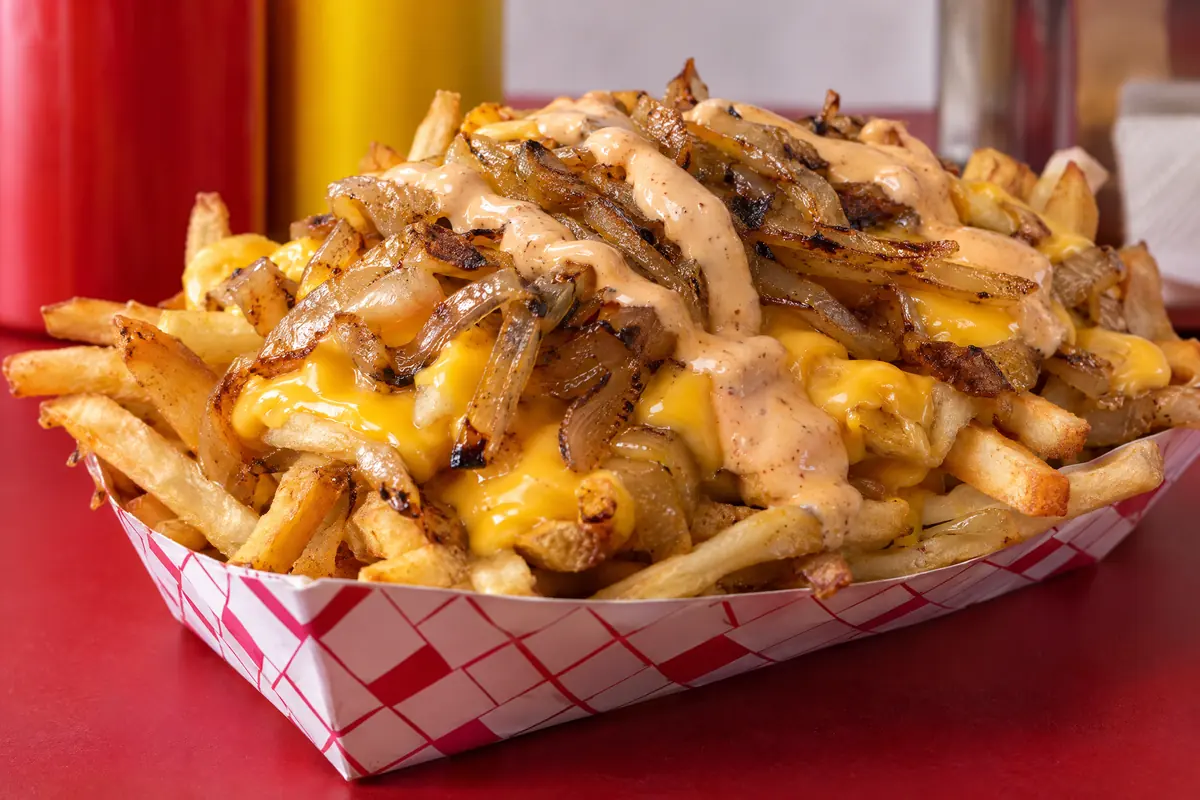
The loaded order starts with standard In-N-Out fries, then adds two slices of melted American cheese, grilled onions, and spread. It is a fry customization, not a separate meat dish.
The onions add sweetness, while the spread adds tang and creaminess. The cheese ties everything together, but it also makes the fries soften faster.
The name can confuse first-time customers because Animal Style means different things on different menu items. On a burger, it changes the patty and toppings; on fries, it changes the fries and toppings.
What Comes on Animal Style Fries?
- Fresh-cut In-N-Out French fries
- Melted American cheese
- Grilled onions
- In-N-Out spread
The order does not include beef, a burger patty, lettuce, or tomato. Chopped chiles, whole grilled onions, and other additions are separate requests.
What Is the Spread?
Spread is In-N-Out’s creamy, tangy sauce with a flavor similar to Thousand Island dressing. It includes a sweet pickle relish note, but the company does not publish a full copycat formula.
The spread matters because it is the wettest topping on the tray. It brings the classic flavor, but it also reaches the fries quickly when the order sits.
Are These Fries on the Official In-N-Out Menu?
The order is widely recognized at In-N-Out, but it does not appear as a separate item on the company’s published Not-So-Secret Menu page. That page describes Animal Style as a customer preparation for burgers.
The restaurant still handles the request as a familiar customization. If the phrase causes confusion, order the fries with melted cheese, grilled onions, and spread.
The official nutrition page lists regular French Fries and separate add-ons. It does not publish a dedicated nutrition line for this completed order.
How to Order Them at In-N-Out
The simplest order is Fries, Animal Style. That phrase tells the order taker to add cheese, grilled onions, and spread to the fries.
- Order one regular fry, then say Animal Style.
- Add “well done” if you want a darker, firmer fry.
- Ask for spread on the side if you will walk, drive, or wait before eating.
- Ask for a fork and extra napkins for a takeout order.
What to Say if the Term Is Not Recognized
Use the component order Fries with melted cheese, grilled onions, and spread. This wording removes the menu language question and names every topping.
For a no cheese version, say Fries with grilled onions and spread, no cheese. The toppings and prices can vary by location, so check the order screen before paying.
These Fries Versus Cheese Fries and Regular Fries
| Order | Toppings | Best for |
| Regular fries | Salt | The simplest order |
| Cheese fries | Melted American cheese | Cheese without spread or onions |
| Fries with spread | Spread | Sauce without cheese |
| Animal Style fries | Cheese, grilled onions, and spread | The full loaded order |
Animal Style fries are not the same as an Animal Style burger. The burger uses mustard-cooked beef, pickles, extra spread, and grilled onions, while the fries use cheese, onions, and spread.
How Many Calories Are in Them?
A standard Animal Style fries order is commonly estimated at about 750 calories. That figure is not an official dedicated In-N-Out nutrition entry, so treat it as a working estimate.
Third-party nutrition records commonly place the order near 45 grams of fat, 54 to 65 grams of carbohydrates, 15 to 19 grams of protein, and about 1,200 milligrams of sodium. Topping amounts and database assumptions can change those totals.
Why Nutrition Numbers Vary
In-N-Out publishes nutrition for regular French Fries, which are listed at 360 calories per 125-gram serving on the official nutrition page. The company does not publish one finished nutrition line for cheese, onions, and spread together.
A calorie estimate must add the regular fries, cheese, spread, and onions. Different sources use different cheese slices, sauce portions, and fry weights, which explains the range.
Are Animal Style Fries Vegetarian, Vegan, or Gluten-Free?
The standard order contains dairy through the cheese. The spread also contains mayonnaise, so the order should not be described as vegan.
Removing the cheese may make the order vegetarian, but the safest answer depends on the restaurant’s ingredients and preparation practices. For allergies, review the official allergen information and ask the location about cross-contact.
How Much Do They Cost?
Animal Style fries cost more than regular fries because the order includes cheese and extra toppings. The exact price changes by market, tax, and the local register setup.
Current third party menu pages commonly place the order in the mid-four-dollar to low-five-dollar range, but a local screen is more reliable than a national estimate. In-N-Out does not publish one nationwide price list.
Can You Order the Toppings Without Cheese?
Yes, ask for fries with grilled onions and spread, no cheese. Community reports say this can cost less than the full Animal Style order because cheese is the paid addition, but confirm the local price.
A no-cheese version keeps the onion and sauce flavor while removing dairy. Some order takers may call it fries with toppings rather than Animal Style fries.
How to Keep the Loaded Fries From Getting Soggy
Animal Style fries soften because melted cheese, onions, and spread sit directly on fresh fries. The longer the tray waits, the more the moisture changes the texture.
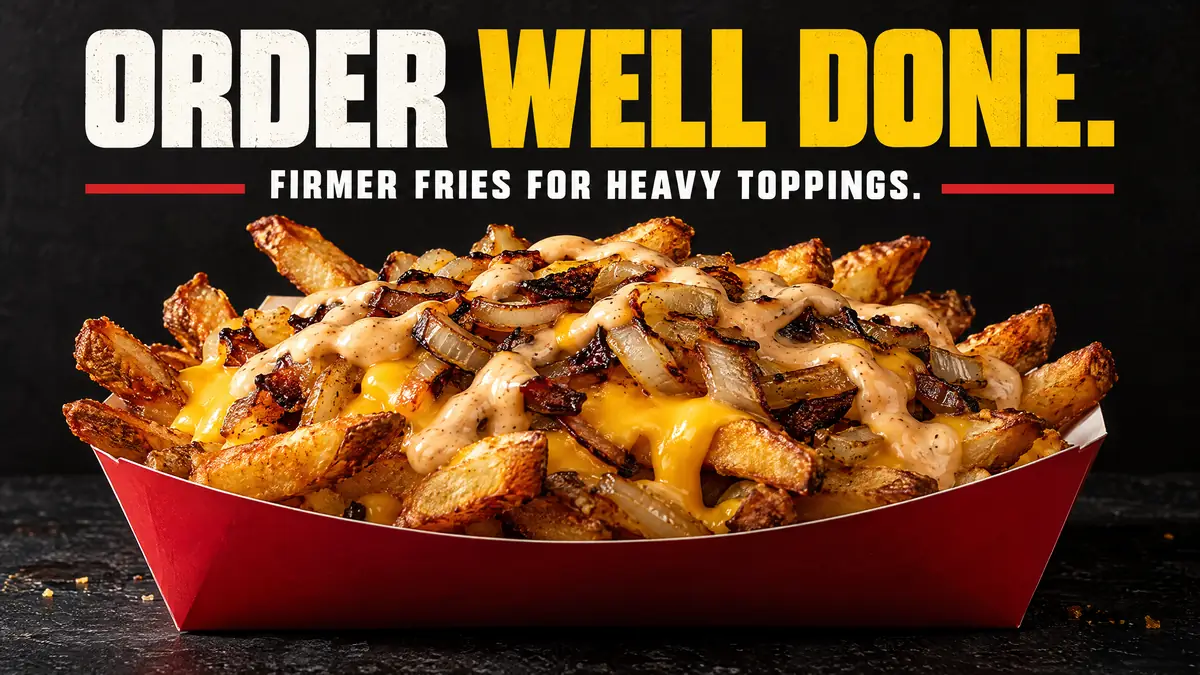
Order Them Well Done
Ask for Animal Style, well done when you want fries with more surface firmness. The longer fry time gives the potatoes a better chance of holding the toppings.
Well done does not make the fries permanently crisp. It only gives the tray more structure before the cheese and spread begin to soften it.
Ask for Spread on the Side
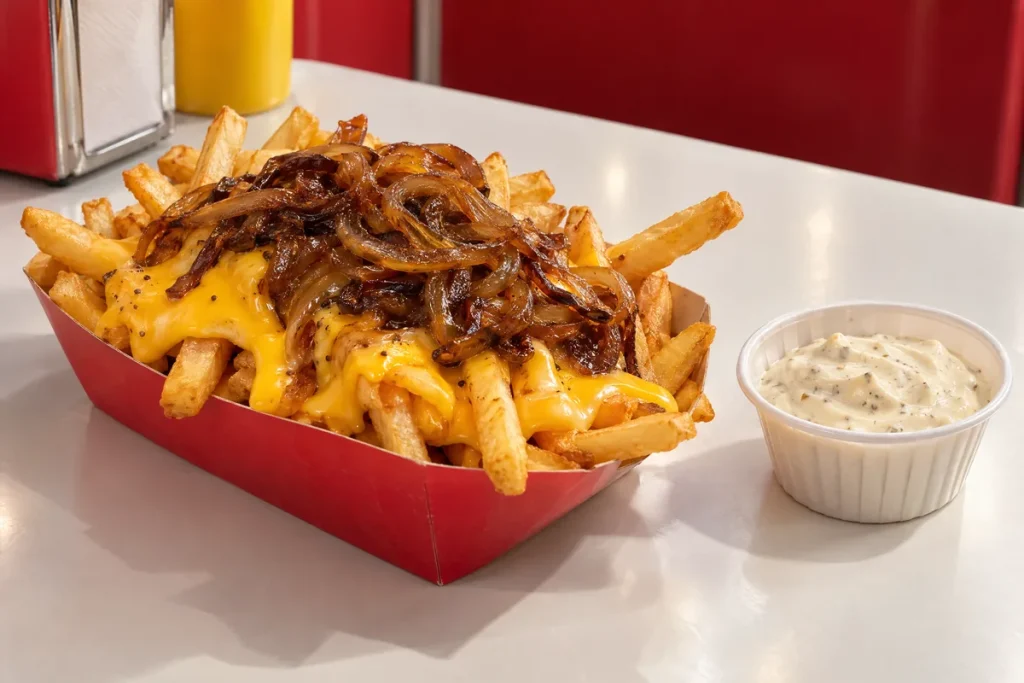
Spread on the side keeps the wettest topping away from the fries until you are ready to eat. Add it at the table, in the car, or just before serving.
Sauce on the side works best for takeout, long walks, and orders that will sit beside a burger. It also lets you control how much sauce reaches each bite.
Eat Them Quickly and Bring a Fork
Animal Style fries are easier to eat with a fork because the cheese, onions, and spread create a loose loaded-fry mixture. Extra napkins help when the sauce reaches the paper tray.
Reheating a fully topped order usually produces softer fries. If you make a copycat version at home, keep the fries, onions, cheese, and sauce separate until serving.
If you are carrying the order, you can ask whether the toppings can be packed separately. That request depends on the location, so treat it as an option rather than a standard build.
Loaded-Fry Customizations
- Extra grilled onions for more sweetness.
- Chopped chiles for heat.
- Whole grilled onions when the location can prepare them.
- Well done or light well for a different fry texture.
- No cheese for a lighter, dairy-free direction, subject to local ingredient and cross-contact checks.
- Spread on the side for better texture during takeout.
Viral names such as Roadkill fries or monkey-style fries are not reliable order terms at every location. Describe the ingredients you want instead of assuming a social-media name will appear on the register.
What the Tray, Ticket, and Takeout Questions Reveal
Mix From Top to Bottom Before the Cheese Sets
Loaded fries can arrive with most toppings on top and plain fries underneath. Use the fork to mix from top to bottom while the cheese is still warm, so the spread, onions, and cheese reach more of the tray.
Animal Style and Well Done Do Different Jobs
Animal Style names the toppings: cheese, spread, and grilled onions. Well done changes the fry cook, so you can request both, but neither request guarantees one exact texture at every location.
What Happens During Takeout?
Public customer reports describe a box with an inner tray or bowl, but packaging can vary by location. The practical issue is the same: cheese and spread keep changing the fries during transport, so eat them promptly.
As the cheese cools, it can bind several fries into a sticky clump. Eat the tray promptly, and use a fork while the cheese is still loose.
Use the Plain-Fries Nutrition Panel as the Baseline
In-N-Out’s official panel lists plain French Fries at 360 calories per 125 grams, with 15 grams of fat, 49 grams of carbohydrates, 6 grams of fiber, 6 grams of protein, and 150 milligrams of sodium.
The panel does not publish a separate total for the loaded variation, so do not present a made-up number as official.
Layered or One-Cheese Requests Need a Counter Check
If you want a layered or one-cheese variation, ask the location how it will assemble the order. Public discussion raises the question, but no chain-wide layering or steaming rule was verified.
Can You Make Them at Home?
Yes. A practical copycat uses thin frozen fries, American cheese, caramelized onions, and a mayonnaise-based sauce with ketchup and relish.
Bake or fry the potatoes until firm, prepare the onions separately, melt the cheese over the fries, and add the sauce last. Serve immediately because the same texture problem starts as soon as the wet toppings hit the potatoes.
For a home batch, a two-stage fry gives the potatoes a firmer base for heavy toppings. Season the fries while they are still hot, then add cheese, onions, and sauce just before serving.
Conclusion
Animal Style fries are In-N-Out fries with melted American cheese, grilled onions, and spread. The clearest order is “Fries, Animal Style,” with “well done” added for a firmer base.
For takeout, request spread on the side and eat the fries quickly with a fork. Check the local screen for price ranges: and treat calorie estimates as estimates because the chain does not publish a dedicated Animal Style fries nutrition line.